

What You Need to Know About Reaching Your Fitness Goals – Part 4
Nova Health Club • June 21, 2018
Moving the Way Our Bodies Were Meant to Move - Functional Movement.
Health comes before fitness and performance! Moving well and often is another component to being healthy and a prerequisite prior to attacking your bigger fitness and performance goals. Moving well without pain or restrictions is called ‘Functional Movement’. Having functional movement means that your body moves the way it was designed to, thereby allowing you to do the activities you enjoy doing without pain or discomfort. If you establish a foundation of functional movement you will more likely get the results you want from your fitness training program. On the other hand, if your body does not work the way it was designed to and you neglect this when starting a fitness program, you will struggle with reaching your fitness goals and even risk injury. A dysfunctional body with joint restrictions stemming from lack of mobility or stability does not work as well as a functional one and therefore the dysfunctional body must be more careful when starting a new fitness program.
To better understand functional movement we must acknowledge first how we were designed. The human body has evolved over hundreds of thousands of years to move in a specific way. Basic activities like lifting, walking, running, jumping, throwing and climbing were part of everyday life for human beings. Doing these movements repeatedly lead to optimal muscle strength and joint range-of-motion to live and survive and helped evolve the biomechanical bodies we have today. If our ancestors lived without such function or with movement restrictions the chances of survival would have been limited. Fast forward to today, in the last 50 years or so we have eliminated much of our natural daily functional movement through the advancement of technology. It is not so much technology that we should blame for our dysfunctional movement but our relentless pursuit to make our lives easier by doing less work.
In the book, ‘The Blue Zones’, highlighting areas on Earth with the most amount of centenarians (people over the age of 100) living functional lives, author Dan Buettner reveals the lifestyle habits that give these centenarians such longevity. One of the underlying themes in all the Blue Zones, is movement and moving often. None of these people living long high quality lives sit in cars or with screens in front of them all day. They are all moving every day whether with structured exercise, walking, gardening or manual labor. As a result, they maintain their functional movement to continue moving the way they want into their 80’s 90’s and often past 100 years old!
Most of the world’s population resides in cities where we naturally become part of the socio-economic system that promotes being sedentary. With this inactive lifestyle (compared to our ancestors or people living in the ‘Blue Zones’) we move less and lose our ability to functionally move the way the human body was designed for. It is evident in the stiffness and pain we may feel at rest in our muscles and joints. Then when we attempt to do something physical such as play a sport, hike on the weekend or move furniture we experience how much more difficult it has become due to increasing stiffness and pain. When movement causes pain the result is that we start moving less and the negative cycle perpetuates itself leading to chronic pain, weight gain or development of a more serious health issue. If we are fortunate enough to be aware of this and decide to take action it starts with us beginning an exercise program which is fantastic because movement begets movement…
...However if your body is not working well with respect to functional movement, it is imperative to clean this up with specific tailored ‘corrective’ movement that meets your needs and abilities. Unfortunately, most people start an exercise program without knowing what their body needs and begin programs that were designed for functional bodies. For example, a typical weight loss program (which people tend to look for over a functional one) requires high heart rate, high caloric expenditure and maximally targeting muscles in the legs with an exercise like weighted squats. However if your core is not stable enough or if you do not have sufficient ankle or hip mobility, doing this type of program only reinforces the dysfunctional movement patterns and ultimately can lead to injury, forcing you to stop doing the exact thing you need to keep doing - exercise.
Most of the exercises in the above example are not even so much advanced as they are just requiring basic stability and mobility of your shoulders, back, hips, knees and ankles. This stability and mobility was once there and at one point we were all able to do a great squat and hinge at our hips to pick something off the ground. As children we moved in all the ways our ancestors did thereby maintaining functional movement the way the human body was designed but through the course of life, spending more time in cars, at desks and watching TV on couches we lost it.
It takes a more knowledgeable fitness training coach to understand movement prerequisites specific to you and to then design a program that corrects your imbalances or asymmetries. To otherwise follow a high intensity exercise program on a foundation of poor functional movement is a recipe for more stiffness, pain and potential injury. An exercise program not specific to you will be inferior to an exercise program that addresses your body’s specific needs and abilities. The best exercise programs are those that provide corrective exercises to build and maintain functional movement. This foundation will allow you to progress into higher intensity compound strength movements that can then be used to increase your performance and optimize your fat loss.
Health is a prerequisite that comes before achieving results from your performance based fitness program. Part of being healthy is having a physical body that moves well without restrictions or dysfunctions and that is why it is so important to do the right exercise program for what your body needs. If you want the fitness, aesthetic and performance results that are possible with regular exercise, know that you may have to take a step back to clean up some movement dysfunction. One of the best ways to ensure you are training the right way is to invest in a professional coach who understands functional movement. Such a coach will assess your movement prior to designing a program thereby ensuring the sustainability of your investment and your body for the years to come.
Early in our series we exposed the flaws in most popularized exercise programs - those not designed by professional lifestyle and movement coaches. These cookie cutter programs available everywhere assume the trainee has the rest of their life in a healthy balance such as practicing optimal recovery and minimizing negative stressors. These programs are great in theory and can deliver results but the reality is that most people are not taking care of themselves in a way to benefit from this type of exercise training. Compound this with the desire for quick results and the underappreciation of functional movement for physical health and it is no wonder why people do not maximize the results they want from their fitness and exercise training program. Even worse is when injury then occurs while following such programs which will hold you back even further from your goals.
In Part 5 and the final post in this series we will explore nutrition as a health prerequisite required to get the most out of your exercise training program. Our nutrition habits have a direct impact on the results we get from our exercise program.

Default vs Future Thinking Here is a question we should all be asking ourselves more: "What would the future version of you be doing right now?" Not the current version who is tired, busy or overwhelmed. The future you who is leaner, stronger, more energized and showing up powerful in every area of life... The version of you that has the results you want. The Future Self Thinks Differently And they got there by making different choices than the easy ones our current self so often subscribes to. Your future self doesn't cancel a workout because sleep wasn't perfect. They don't skip exercise because they are tired or because something came up at work, a last minute social invitation appeared or there's a haircut to fit in And if something does get in the way, they reschedule to earlier, later or the next day. They don't put health at the bottom of the list and wait for the schedule to calm down. Because they figured out something most people never do - things never calm down. Life doesn't get less busy. It just finds new ways to fill every gap you leave open. Your future self made a decision at some point. They started prioritizing their health the same way they prioritize family and work. Not above everything else. Right next to the things that matter most. That one decision is what separates the people who get results from the people who stay stuck in the same cycle year after year. The Two Versions of You Here is the thing most people miss. There are always two versions of you competing in the decision making process. The current default version that is tired, reactive and looking for the easy way out. And the future version that is already living the life you want and making choices that reflect that. Every single day you are casting votes for one of those two versions. Every time you show up when it is hard you are not just getting a workout in. You are becoming your future self. Every time you cancel/skip/defer you are voting to stay exactly where you are. The identity shift doesn't happen when you reach your goal. It happens in the small decisions you make when nobody is watching and things are hard. The Question That Cuts Through Every Excuse Stop asking yourself how you feel about your workout today. Start asking yourself what the person you want to become would do today. That question cuts through every excuse because the answer is always the same. - they show up. Next time you are faced with a decision that interferes with your workout, take a moment and ask yourself two things. What does my default mode want me to do? And what would my future self do? The gap between those two answers is exactly where your results live. The Shift Starts With One Decision You don't need a perfect plan. You don't need the right time or the right conditions. You just need to start making decisions that your future self would be proud of. One session at a time. One choice at a time. That is how the identity shift happens. That is how the results follow. And if you want support making that shift - a coach and a team who hold you to the standard of your future self, not your current default - is exactly what we are here to do.

Why Your Brain Talks You Out Of The Gym Every Time There are days when my energy is low. I didn’t sleep well the night before and I'm deep in work, the timeline is tight and everything is pulling at me at once. In those moments the last thing I want to do is work out. I'm tired. I'm stressed. I'm scattered. Not feeling it at all. And my brain does what every human brain does in that moment - it looks for the easy way out. The easy way out is always the same - skip the workout. I tell myself I'll make up for it tomorrow or next week… Or when things calm down. But tomorrow and next week are never any different. I've been training consistently for 30 years and I still feel this at least once a week and I've learned to recognize what's actually happening in that moment so that I don’t self sabotage. The Two Voices We all have these moments and when it happens there are two voices in your head. The first voice is loud, justified and incredibly convincing. It tells you that you're too tired. That you deserve a break. That you've been working so hard and one missed workout won't matter. That you'll go tomorrow for sure. This is your default voice - the one wired for the path of least resistance. It has kept humans safe and comfortable for thousands of years but it is working against you big time! The second voice is quieter. Easier to ignore. It doesn't shout. It just says - go anyway. That voice is your future self. The version of you that is leaner, stronger, more energized and more capable. And the future version of you didn't get there by listening to the loud default voice. The future self got there by learning to hear the quiet one. Here's what most people don't realize. Every time you listen to the default voice you make it louder. Every time you listen to the quiet one you make it stronger. The workout you skip today isn't just a missed session. It's a vote for the version of you that stays stuck. Your Default Operating System We all have a default mode - a way of thinking and behaving that kicks in automatically when things get hard. If your health is not where you want it to be, your default operating system is a big part of the reason. It generates a thousand reasons why not to continue when things get challenging. Too tired. Too busy. Too stressed. Not the right time. After the holidays. When things calm down. Sound familiar? The default voice doesn't just keep you from working out. It keeps you exactly where you are - year after year - wondering why nothing ever changes. Most people don't fail because they are lazy. They fail because they never trained the most important muscle they have - their mind. Thoughts create feelings. Feelings create actions. Actions create results. Change the thought and you change everything. The Agreement I Made With Myself On the days I don't want to train I make a simple agreement with myself: if I go, I am permitted to put in less effort. That's it. I tell myself it is okay to go have a crappy workout. In doing that the pressure of having to perform at my best disappears completely. So I go with zero expectation and the mindset that anything is better than nothing. And almost every single time, after the warm-up, I'm in the groove. What felt like a terrible idea 20 minutes earlier ends up being exactly what I needed. The hardest part is always putting on my shoes and walking out the door. That's it. The shoes on is the whole battle. Hilarious isn't it? Newton had a law for this. A body at rest stays at rest. The inertia that keeps you on the couch, at your desk or stuck in your head is real. But a body in motion stays in motion too. The moment you take that first step the rest takes care of itself. The Days You Want To Skip Are The Most Important Here's a reframe that changed everything for me. The days and weeks that feel the most scattered and stressful are actually the most important times to show up. Not despite the stress - because of it. Exercise is one of the most powerful stress regulators your body has access to. The workout you want to cancel the most is almost always the one you need the most. So the next time your brain starts telling you to take a session off, recognize what's happening. That's the loud voice. The default voice. The one keeping you small. Your future self is the quiet voice on the other shoulder saying go anyway. Every time you listen to that quiet voice you are casting a vote for the person you are becoming. Show up tired. Show up stressed. Show up scattered. Just show up. A bad workout is always better than no workout. Always!!! You Don't Have To Figure This Out Alone One of the biggest reasons people keep listening to the loud default voice is because there is no one holding them accountable. When the only person expecting you to show up is yourself, the loud voice almost always wins. That's not a character flaw. That's just human nature. Having a coach and a team expecting you to walk through that door changes everything. It shifts the workout from a promise you made to yourself - which is easy to break - to a commitment you made to someone else. If you're ready to stop letting the loud voice win, let's talk. Book your free consultation by clicking the button below.
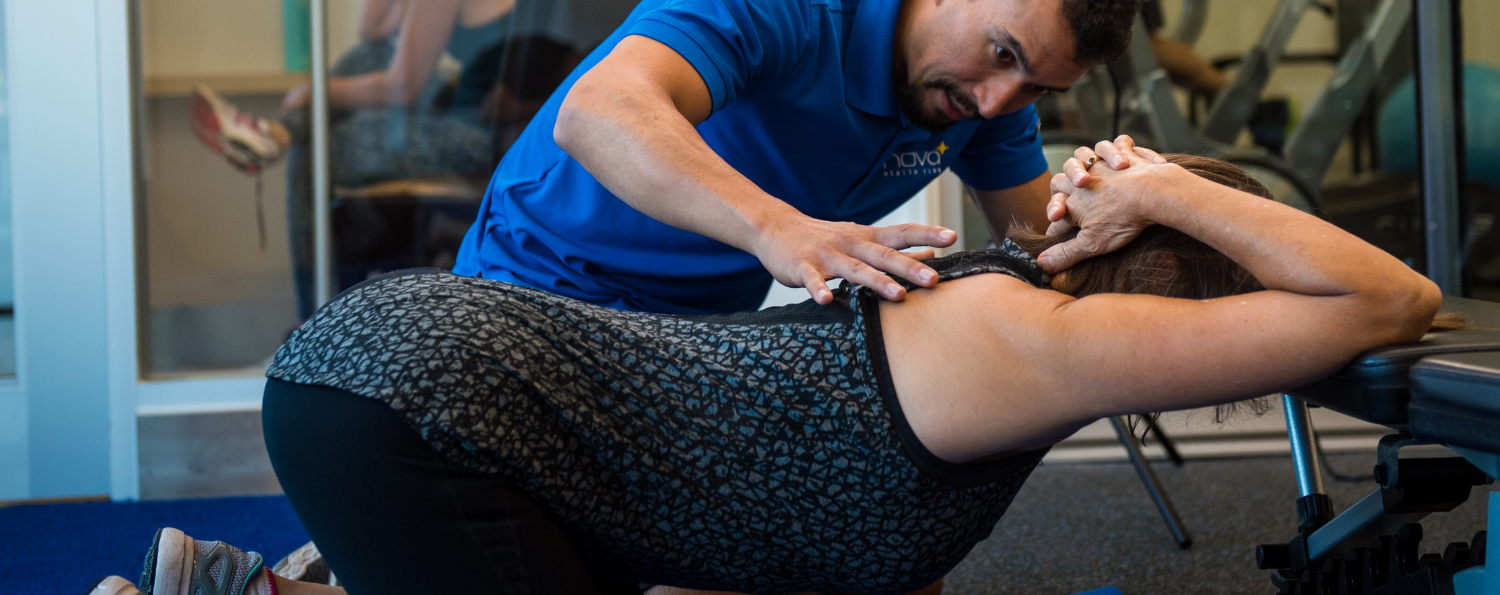
Injured? Here's Why You Should Keep Training Injuries happen to all of us at some point. Maybe it happens during a workout. Maybe it's moving a heavy piece of furniture at home. Maybe it's just waking up one morning and something doesn't feel right. Whatever the cause, the moment something hurts most people do the same thing - they stop. Rest. Recover. Wait until they feel better. I understand why it feels like the safe and logical thing to do. But after 25 years of coaching I can tell you that stopping completely is almost never the right answer. The Doctor's Advice - And Why It's Incomplete When something hurts, most doctors will tell you to rest and stop working out. I get why they say it - they don't want you making things worse and they are being cautious. But here is what most doctors don't factor in: there is a difference between resting an injured area and stopping all movement entirely. Your doctor is not trained in how to work around injuries during exercise. That is a completely different skill set - one that coaches who have studied kinesiology, anatomy and biomechanics spend years developing. Knowing how the body responds to training under stress or injury is exactly what we do. And the answer is almost never to stop moving completely. The Choice Most People Don't Realize They're Making When you get injured you actually have two options. Most people only see one. Option A is to protect the injured area and keep the rest of your body strong. Option B is to protect the injured area and let the rest of your body get weaker at the same time. When you look at it that way the answer is obvious. And yet most people still choose Option B without even realizing it. I learned this firsthand years ago when I dislocated my shoulder. For about six months I couldn't do any serious upper body training at all. So I kept showing up with the exact same consistency and focused entirely on legs. My legs became super strong during that period. Meanwhile someone who stops going completely doesn't just lose upper body strength - they lose strength everywhere. The injury heals either way. But only one person comes back stronger. Be Solution Oriented - Not Problem Oriented Two people with the exact same injury can have two completely different outcomes based on mindset alone. The solution oriented person works around the injury and keeps moving in a modified way. The person with a limiting mindset stops everything, fixates on the problem and waits. The only bad workout is the one that didn't happen. That is not just a motivational line - it is the difference between people who get results and people who don't. Think Like an Athlete Have you ever heard of a professional athlete cancelling all of their training because of an injury? Never. When a professional athlete gets injured their training becomes modified - not cancelled. They focus on three things: rest, rehabilitation and maintenance. By continuing to train the right way they recover faster and come back stronger. You don't have to be a professional athlete to think this way. This is just how the body works - for everyone. 3 Parts to Fixing Injuries 1) Rest Strategic rest - not complete rest. Avoid the activities that aggravate the injury but keep everything else moving. If you tore a hamstring from sprinting, stop sprinting - but don't stop training entirely. 2) Rehabilitation Specific exercises that promote blood flow and healing to the injured area. A torn hamstring still needs gentle activation to heal faster - not complete shutdown. This is where having a qualified coach makes all the difference. 3) Maintenance While the injured area is healing, the rest of your body still needs attention. There is no reason to lose the strength and fitness you have worked hard to build just because one area is compromised. Common Injuries and What You Can Still Do Shoulder or arm injury? Focus on legs, core and rehabilitation work for the injured area. Back injury? Deep core work, supported upper body exercises and mobility - there is more available than most people think. Knee or leg injury? Upper body work, hip hinging movements and rehabilitation exercises that don't load the joint directly. Twisted ankle? Upper body, core and stretching. More options than you'd expect. The only time to completely stop training is if you are fully incapacitated. For almost every other injury there is a path forward. You Don't Have to Figure This Out Alone Knowing how to modify training around an injury takes experience and knowledge. If you are injured right now and not sure what you can or can't do - that is exactly the kind of problem we solve every day. You don't have to wait until you feel 100% to reach out. In fact the sooner you do the better your outcome will be.

Since joining Nova, Nicole has put in real effort and brought a lot of positive energy to our community. At 55, stepping into weightlifting to keep up with her kids was a brand-new challenge, and she’s tackled it head-on.

Tanya’s journey is a wonderful reminder that fitness isn’t about chasing quick results, it's about building a life you genuinely enjoy.

Think your peak fitness years are behind you once you hit your 50s? Think again.
Meet Kris, a Nova member who recently compared his current fitness stats
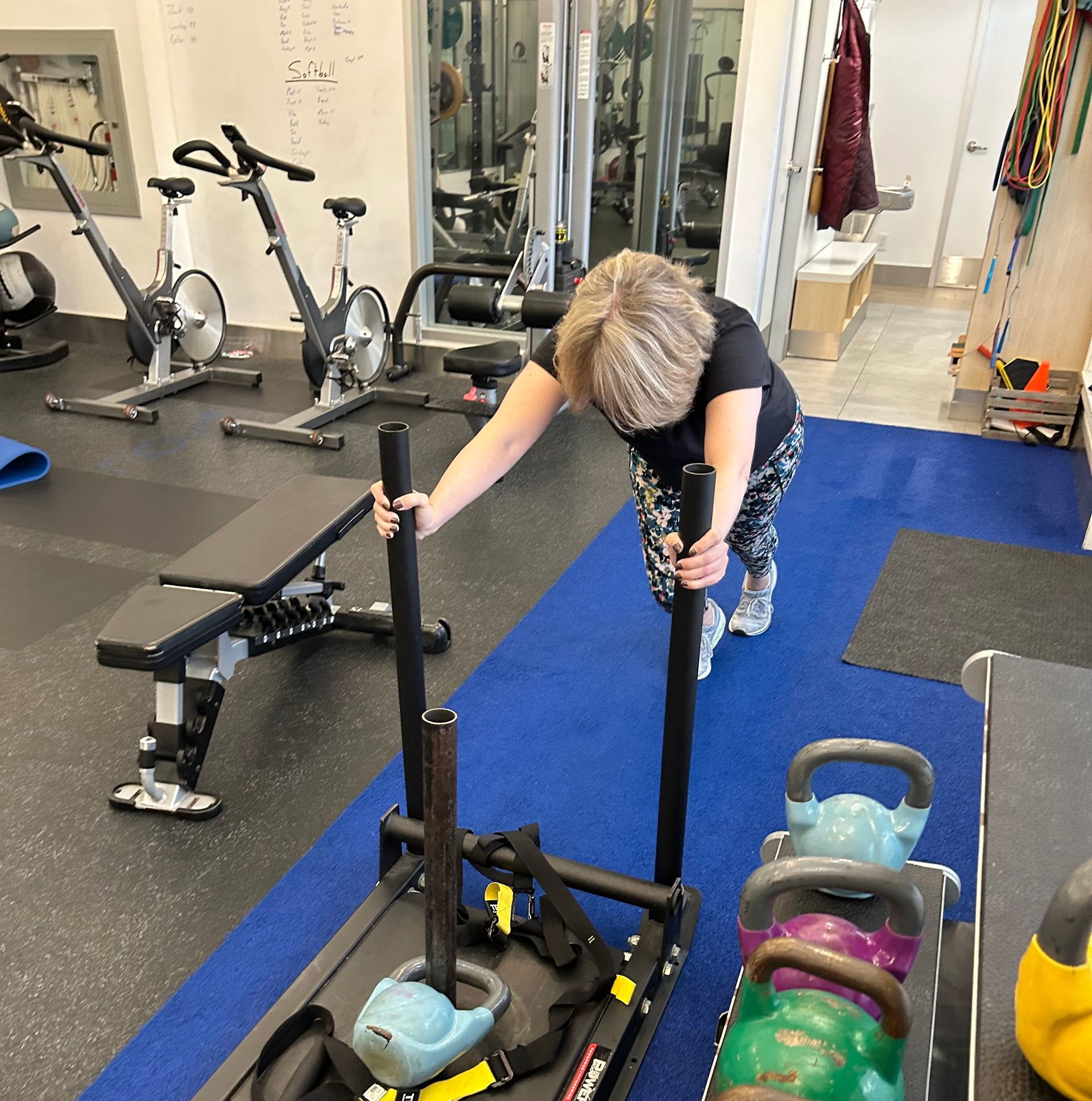
A consistent member for years, Rosalind shows up twice a week and makes her health a priority next to work and family.
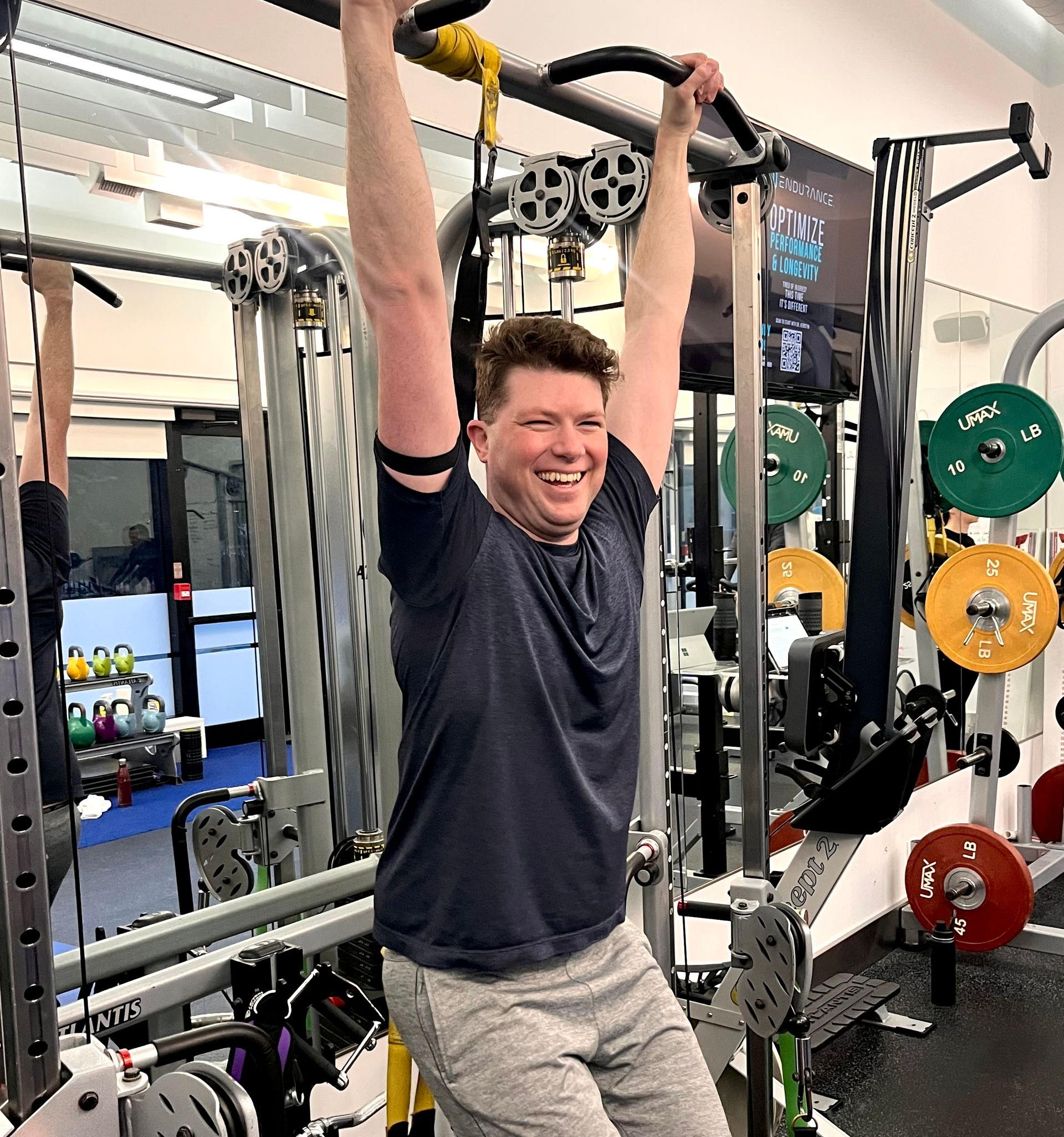
Matt proves that when you add commitment to a structured plan, success is inevitable.

Joy joined Nova with the goal to rebuild strength and push herself physically again. Over the past few months, she has proved her commitment to this goal despite a very demanding schedule.